- Home
- Find Your Art Style
How Do You Find Your Art Style?
What can an artist do to find your art style?
Finding your style isn’t about picking a label or copying someone else. It’s about noticing what you’re drawn to - and repeating a few fundamentals long enough that your choices become consistent.
In this guide, you’ll use a simple 3-step process to move from ‘I like a lot of things’ to a style you can recognize and build on.
You’ll
learn:
- How to spot the patterns in the art you love (subject, color, mood, etc.).
- What to practice first to start forming your style.
- To do small experiments that allow you freedom to paint from your heart.
 Your style is inside of you.
 Your style is inside of you.
How Do Your Find Your Art Style?
Finding your style is exciting - let's go!
Where Is Your Art Style?
Your art is inside of you. We all have an innate knowledge of what's pleasing and what looks good. It's our inner artistic voice, our personal art style.
You just have to find it, nourish it, encourage it and set it free.
The key is to turn off all the distractions, turn off negative voices, turn off what other people saying, and listen to your inner artist.
The Purpose of Your Artwork
Why do we paint art? Our art style can depend on the reasons we are painting.
Ask yourself - Why do you want to paint? What do you expect to get out of painting? What will you do with your paintings?
You may plan on giving them to family and friends, sell them or use them to decorate your home. There are various options.
Basically, artists paint for three different reasons:
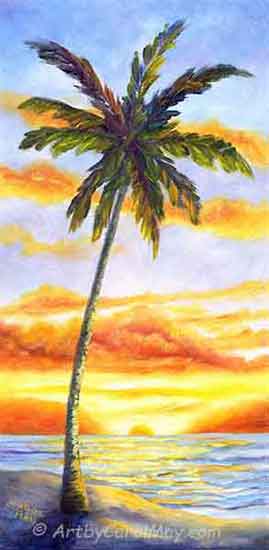 Paint what you enjoy.
- Yourself - We can paint for self-fulfillment. We may want to express the things we enjoy or dislike - children, animals, cars, flowers, farm life, city life, political events, changing seasons, to record history - the list goes on.
- Art Shows - Show artwork has to be impressive. It has to catch the attention of people and the judges. It usually is large. It needs something unusual or different - like pink rocks.
- Sales - We may be painting to strengthen our wallet. Public opinion will probably govern our style. We will keep up on the current trends, colors, and themes. We will want to get our paintings into galleries, online or other sales avenues.
We may paint for one or more of these reasons - possibly all three. There's no right or wrong to this answer.
It's just helping us understand ourselves as an artist.
To make this practical, let’s look at a few common style directions. Don’t treat them as something you need to fit into. Instead, use them as vocabulary for the choices you may be making.
Typical Painting Styles
Experimenting with different styles is part of finding our personal style.
Trying different types of paintings expands our horizons and we can discover new ways to express ourselves.
There are so many different art styles. Here are just a few examples.
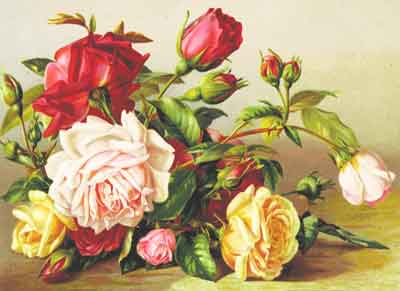
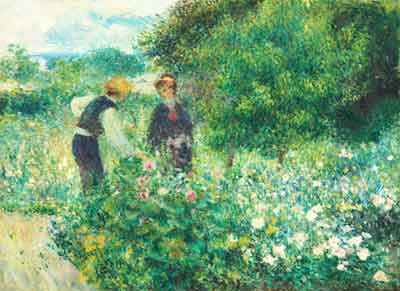 Impressionism
 Realism Painting
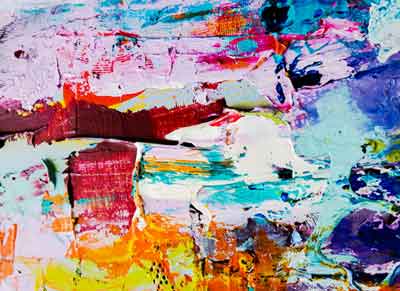 Abstract Art
Impressionism emphasizes light and color, instead of realistic details. The impressionist often uses bold brushwork to create vibrant and dynamic paintings.
Realism depicts subjects as they are in real life. It takes sharp observation, technical skills a lot of time and patience. It's a challenge, but it can be very rewarding.
Abstract art works with shapes, colors, and forms, that may or may not represent real-life subjects. It conveys emotions and ideas rather than discernible objects.
What Do You Enjoy?
Identify your favorite types of artwork: visit galleries, look online, social media, and in books.
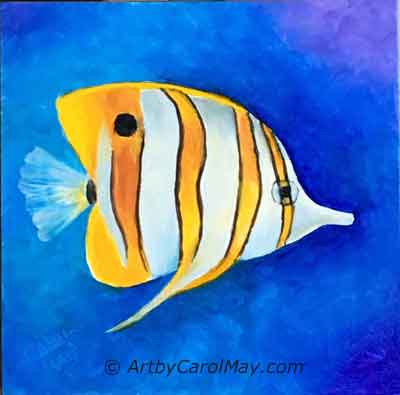 What artwork do you enjoy?
- What do you admire in the artwork of others?
- What do you like in your own artwork.
- What do you enjoy painting?
- What do you paint most often?
Do you find yourself painting certain subjects, similar colors or moods, repeating compositions or techniques?
Answering these questions is the jumping off point of identifying your individual style.
The 1-2-3 of Finding Your Art Style
The real artist is inside of you. Keep tuning into your art heart!
- Understand the fundamentals (color, composition, and values).
- Practice what you admire and enjoy.
- Don't be afraid to experiment.
The more you paint, the more you'll see your gift emerging as your personal style.
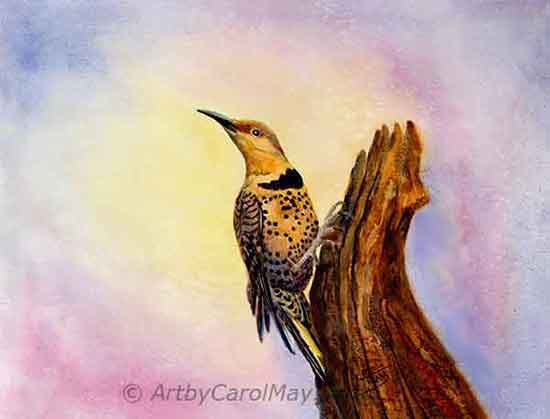
1. Know the Fundamentals
Successful paintings are built on composition, color, and values. It's vital to have a working knowledge of the fundamentals.
When you understand something, you can bend and flex it, add to it, subtract, expand or condense it. - You can change it into your own individual style.
Check your paintings for color, composition and values.
2. Do a Series of Paintings
Look at the artwork you admire (yours and others). Ask yourself what impressed you about the painting. Choose one thing you like the most.
- Was did you admire - the colors, values, composition, brushwork, etc.?
- Are you able to paint it? Not the entire painting - just the one thing that impressed you the most.
- Choose your own subject and practice the thing that impressed you.
See what you can do with it in a series of several paintings. You will see your style emerging, as you continue painting what you like.
Painting daily or as often as possible is the key to improving our art.
3. Experiment
Don't be afraid to experiment. Art is freedom when you allow it to be.
 Set your inner artist free!
You did a series of paintings to get a grasp on one thing you admired in artwork.
What did you like - the color mood, an exciting composition, value contrast, whatever?
- Now, take that one thing and listening to your inner artist's heart do some experimenting.
- See what can you do with it by adjusting, bending, moving, changing it - making it part your individual art style.
- Do you still like it? Is it worth incorporating into your future paintings?
You're finding what suits your style.
Your Style Audit (10 minutes)
This is a quick exercise to help you see your style as it’s forming. You’re not choosing a style label - you’re identifying a few choices you naturally repeat (subject, colors, edges, mood, etc.).
Answer the questions below quickly - don’t overthink it. Your goal is to create a simple plan for your next 5 artworks.
How to Use This:
- Answer the questions in 10 minutes.
- Choose 2–3 constraints for your next 5 artworks.
These are just small paintings - in addition to your regular artworks. - After you finish the mini-series, come back and update the answers - your style will become clearer each round.
- My painting subject (choose 1 subject for your next 5 pieces):
I'm most excited to paint: ____________________
3 related variations (same theme, different angles):
_________________, _________________, _________________ - My color preferences (choose one type, then 3 specifics):
Muted / Saturated / Neutral / High-contrast
3 colors I use most: ____________, ____________, ____________
One color I'll avoid for this series (optional): ______________ - My brushstrokes + edges:
I prefer: smooth / visible brushstrokes / sketchy lines
Edges: sharp / soft / a mix - My "mood words" (pick 2-3):
Calm / Bold / Dreamy / Energetic / Elegant / Whimsical / Peaceful / Dramatic / Intricate / other
My top 3: ______________, _______________, _______________ - Summary - My style constraints for the next mini-series: I will do this:
Subject: _______________
Colors: ______________
Level of detail: simple / suggested / full details
Background: simple / suggested / fully rendered - Quick self-check after 5 pieces:
What stayed consistent naturally? ______________________
What felt forced? ________________________
What will I keep for the next series? _________________________
Take Your Time
Don't try to force yourself into a certain style of painting. It won't be real and it won't be you. In the long run - it won't be fulfilling.
Let your style find you, as you continue painting and trying new things. Be patient and keep listening to your inner art voice - your style will emerge.
Your personal painting style is in you - it's a part of you - just listen for it - it's as individual as you and uniquely yours.
Set your style free!
Frequently Asked Questions
Here are a few things you may be wondering about.
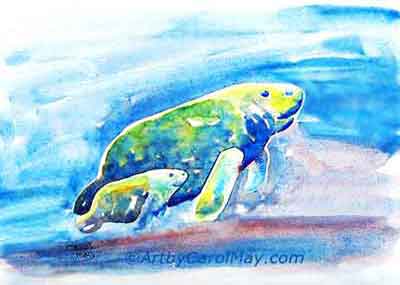 You style is as individual as you.
Do
I Need to Choose a Medium Before I See My Style Emerging?
Do
I Need to Choose a Medium Before I See My Style Emerging?
You don’t have to, but it helps. Style becomes easier to recognize when you stay with one medium long enough to learn the painting techniques of the medium.
If you switch mediums often, expect your style to develop slower.
How
Do I Know If I’m Developing a Style?
How
Do I Know If I’m Developing a Style?
A style looks intentional and repeatable.
Keep doing your mini practice series along with your finished paintings, so growth and consistency happen together.
What
Are the “Style Ingredients” I Should Pay Attention To?
What
Are the “Style Ingredients” I Should Pay Attention To?
You might notice: subjects you prefer, composition (cropping and focal point), values (high contrast vs soft), colors (muted vs saturated), edges (sharp or lost), texture (smooth vs rough), and details (simplified vs intricate).
How
Can I Make My Work More Cohesive Quickly?
How
Can I Make My Work More Cohesive Quickly?
Use one constraint for a series of 5 pieces for example: a certain color selection, one type of brushwork, a mood, or one repeated composition, etc.
Cohesion comes from repeated use. Before picking up a brush, take time to plan each painting.
Is It
Okay to Study or Copy Other Artists to Learn a Style?
Is It
Okay to Study or Copy Other Artists to Learn a Style?
Certainly, that's fine. The best approach is to study and copy privately for learning purposes.
Then use what you have learned to create "original work" using the same underlying principles without duplicating their paintings.
How
Long Does It Take to Find Your Own Style?
How
Long Does It Take to Find Your Own Style?
Many artists start seeing consistent patterns within a few weeks of focused work.
But an original style usually emerges over months of repetition. The fastest path is doing small series (5–10 pieces) with a consistent subject or techniques.
Can My Art Style Change Over Time?
Yes, it may and that’s healthy. As your skills and interests grow, your style will refine, simplify, or branch into new directions.
Your art style isn’t something you pick once. It’s something you build by repeating a few choices long enough that they become consistent.
Start with solid fundamentals, commit to doing small series, and use simple experiments to refine what feels most like ‘you.’
Your Next Steps
Choose one:
- Pick one subject and create a 5-piece mini-series this month.
- Limit your palette to 3–5 colors for the next two paintings.
- Make a ‘style ingredients’ list (subject, colors, mood, detail level, texture, etc.) and keep it beside your workspace.
When you finish your mini-series, come back and compare the pieces. You’ll be surprised how clearly your art style is showing up.
If you want a bigger picture plan for how to improve your paintings step by step, go back to the main guide and choose your next step.
Keep Painting and Enjoy!
You Might Like These
How to Start a Painting: What Do We Paint First?
Do you want to know how to start a painting? What do we paint first - the background, the main subject, do we start painting in the back, the front or where?
Common Painting Mistakes | Composition, Focal Point, Values
How to fix common painting mistakes in any medium. The fixes for composition, focal point, value problems, plus links to watercolor and oil painting corrections.
Painting Daily Improves Your Art Skills
Can painting daily really make you a better artist? Regular painting will put your art into overdrive! You don’t have to paint perfect. Just paint more often.
Artists Block: Tips on How to Get Back to Painting
How to overcome an artists block. All artists can have blocks or delays, but we get over it. What is a painting art block? How do we get started painting again?

Recent Articles


-
Design Paintings
Sep 04, 26 12:00 PM
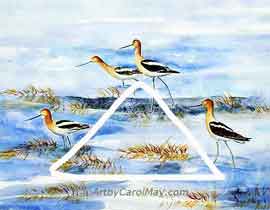 There are basic types of compositions in art paintings, symmetrical and asymmetrical. Most other compositions are variations of these two basic types. See paintings of the common types; S-curve, pyram…
 -
Good Compositon
Aug 27, 26 01:25 PM
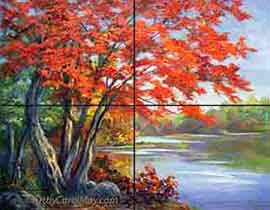 A good composition draws the viewers to our paintings. How do we make a good composition? When we are designing a painting a good rule is place the main subject (the focal point) left or right of the…
 -
Doing Oil Painting
Aug 09, 26 01:50 PM
 This how to do painting guide helps intermediate artists create a stunning artwork of a horse running in the surf. You will enjoy doing this step-by-step tutorial from the start to the finishing detai…