- Home
- Watercolor Supplies
- Aquabord
Aquabord Solves a Lot of Watercolor Problems
Over 20 years ago I switched to Aquabord - and I've never looked back.
It's a wonderful hardboard surface that highlights the beauty of watercolors without the hassle of painting on paper.
- No stretching paper
- No mats
- No glass
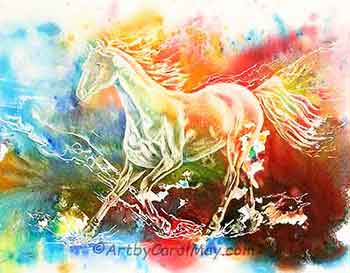 "Freedom" from paper paintings
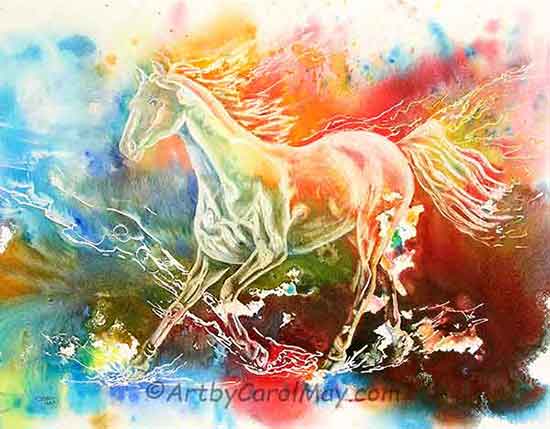 "Freedom" from paper paintings
Why Did I Switch to Aquabord?
When I began painting watercolor the paintings were on Arches paper. It's an excellent, traditional watercolor paper. The finished paintings were matted and framed under glass.
My husband and I were enjoying doing the street art festivals in Florida.
Disaster Struck
At a festival on the Gulf Coast, the winds started gusting up to 60 MPH. Some of the artist's tents on the end of the row were blowing down!
Even though we were sandwiched tightly between other tents in the middle of a row, we got nervous about allowing customers into our tent. If the tent went down, they could possibly be injured by broken glass.
The paintings were in danger, too. If watercolors on paper get moisture behind the glass, they can be water stained or even grow mildew.
There Had to Be Another Way!
After we got home from the festival, I started pouring through all my art magazines and books.
That's when I found this wonderful panel made by Ampersand, an American company near Austin, Texas.
As an affiliate I earn from Amazon sales with no extra cost to you. Learn More
The Advantages of Aquabord
This has been my favorite watercolor support for many years now. Let's look at the advantages and disadvantages of paper versus my discovery.
Compare: |
Watercolor Paper |
Aquabord |
|
Stretching needed? Glass required? Warping risk? Color brilliance Humidity concern? Can I lift paint? Weight |
Yes Yes Yes Sinks into paper Mildew, staining Limited Heavy (with glass) |
No No None Reflects off clay surface None Yes, even back to white Light weight |
NO STRETCHING: You can get straight to painting.
NO MORE GLASS: There is no glare from glass, no buying or cutting glass.
LIGHTER WEIGHT: No more carrying around heavy watercolor paintings.
NO MATS: No more shopping for the perfect mat color or time cutting mats.
NO WATER STAINS: No concern about water stains or mildew.
BRILLIANT COLORS: The paint does not sink in like on paper.
LIFT DRY PAINT: Dry paint may be lifted with no worry of damaging the paper.
Getting Started:
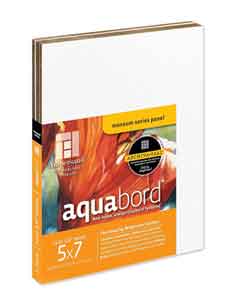
• What to buy first: Start with a pack of three 5x7 flat panels. They’re the most affordable way to try Aquabord, and the smaller size is perfect for practice.
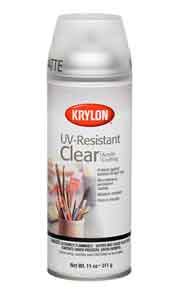
• What you’ll also need: Once your painting is dry, seal it with Krylon UV resistant spray - 2 to 3 light coats.
What Exactly Is Aquabord?
Aquabord is an acid-free, completely archival hardboard panel made especially for watercolor. It's also excellent for gouache, casein, ink and even acrylic paintings.
- Aquabord is made on a warp-resistant 1/8" FSC-certified hardboard. The base panel is totally sealed. Then one side of the panel is coated with an archival, acid-free kaolin clay.
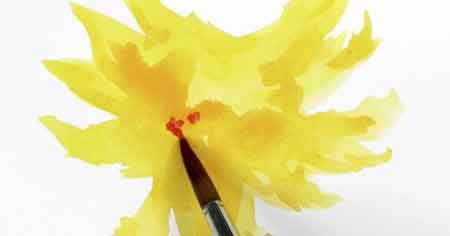
- The surface has a texture similar to cold-pressed watercolor paper.
- The panel does not buckle, warp or shrink, no matter how much water we put on it.
- Paint colors may be lifted off to reveal the white board.
- The colors remain vibrant and finished paintings may be framed without glass. How wonderful is that!
Two Styles of Aquabord
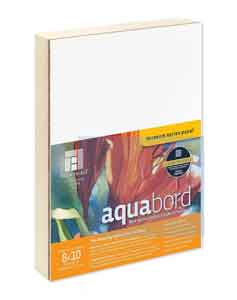
One style is the 1/8" flat panel. The other has the panel attached (cradled) on a birch plywood frame.
Paintings on a cradle do not require a frame. Paint or stain the sides of the cradle to compliment your artwork.
Flat panels are a 1/8" thick panel that needs a frame for display.
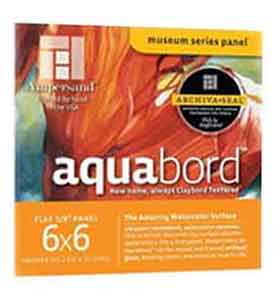
Cradled panels are attached to a 7/8", 1 1/2", or 2" frame.
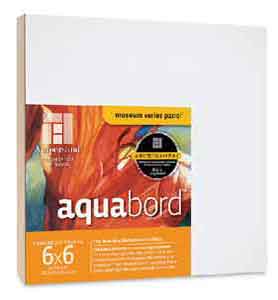
Your Paintings Will Shine with Brilliant Color
My favorite thing about painting on Aquabord is the beautiful colors.
The light reflects off the white clay surface and shines up through the watercolors to create bold, lively colors.
Watercolors on paper sink into the paper and lose their brilliance. You get beautiful colors by painting on these wonderful panels.
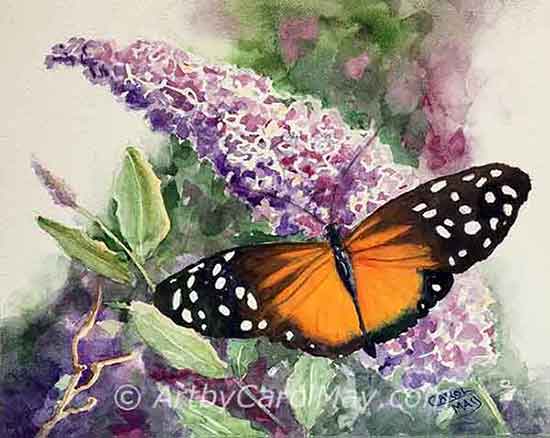 The beauty of watercolor paintings.
If you want experience glorious color for yourself, start with a 3-pack of 5x7 panels - they’re inexpensive and perfect for experimenting.
We May Remove Paint from Aquabord
Wet paint - will lift off with a damp, soft brush. If the layer of paint underneath has dried, it will remain fixed when you take off the top layer.
Dry paint - will come off with a damp, stiff brush. It can remove the paint all the way down to the surface. We may also use a knife, Claybord tools or sandpaper to make highlights and remove paint.
Masking fluid works well on Aquabord without any problems.
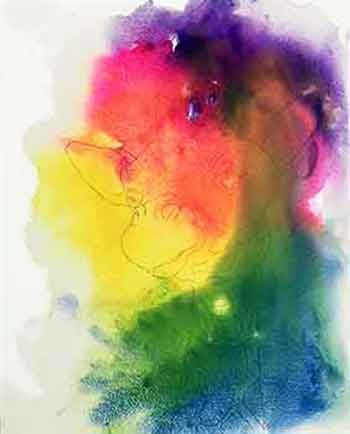 A wash was applied and then completely dried.
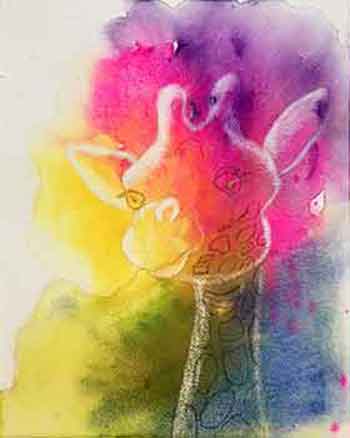 Dry paint was removed to reveal the giraffe.
Protect the Painting
After the watercolor is thoroughly dry, apply 2-3 coats of Krylon UV resistant acrylic spray for protection. (I usually wait a couple of days, just to make sure.)
The spray will protect the painting from moisture, dust and ultraviolet rays.
That's why the painting does not need glass for protection.
Don't hang any painting in direct sunlight. The sun will not harm Aquabord, but it could potentially fade the paint colors.
Aquabord Is a Joy to Paint On!
It's my favorite watercolor support - you'll enjoy it, too!
Start with small panels to get the feel of this wonderful painting surface. If you have used it before - you may want to go for a larger one or a cradled panel.
Aquabord
Flat Panels
Aquabord on a Cradle
Krylon UV
Resistant Spray
Recent Articles


-
Paint a Fun Dog
Oct 02, 26 12:00 PM
 It's easy to paint this fun dog on canvas. This is a great way for beginners to start using oil paint. Follow the easy steps that use only three colors to paint this puppy dog. You can learn and use p…
 -
The Big Three
Sep 18, 26 12:00 PM
 You can create good art using the big three painting fundamentals. Learn how to paint good art with good composition including a focal point, values and color choices. Use these three important fundam…
 -
Design Paintings
Sep 04, 26 12:00 PM
 There are basic types of compositions in art paintings, symmetrical and asymmetrical. Most other compositions are variations of these two basic types. See paintings of the common types; S-curve, pyram…