- Home
- Paint Good Art
- Composition
- Composition Types
What Are the Types of Compositions for Painting Art?
The two main composition types are:
- Symmetrical
- Asymmetrical
Most other compositions are variations of these two.
What Is a Symmetrical Composition?
Symmetrical compositions are in perfect balance.
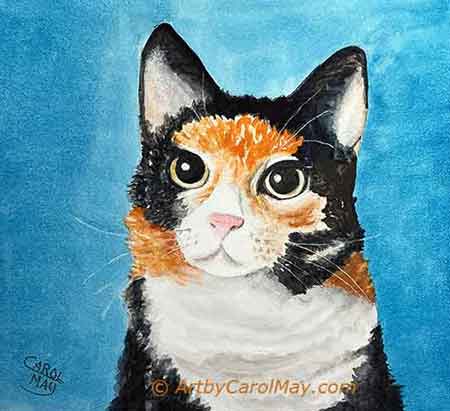 Symmetrical composition
Repeating similar shapes and forms on each side of the painting creates a symmetrical composition.
The elements on one side of the painting are very similar to the ones on the other side.
The composition is evenly balanced and has a feeling of stability and calm.
Symmetrical compositions are very good for painting a formal building where the left and right side look quite similar.
What Makes an Asymmetrical Composition?
Asymmetrical paintings have different elements on each side of the painting.
 Asymmetrical painting
Even though each side has different elements, they visually feel the same weight.
For example: A single large object can be balanced by several small objects on the other side.
This type of composition creates interest and encourages the viewer's eye to move around the entire painting.
Asymmetrical paintings feel more dynamic and interesting, even though they remain in balance.
Balance is an important principle of art.
Aren't There More Than 2 Types of Compositions?
Today's artists use variations of asymmetrical or symmetrical compositions.
Let's look at some popular examples in my artwork.
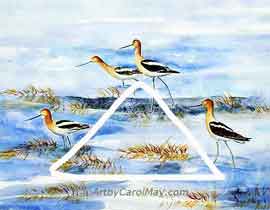
Pyramid Composition
The pyramid is a balanced symmetrical composition.
The wide base of the pyramid provides stability to the painting. The upright thrust of the triangle (pyramid) gives added drama.
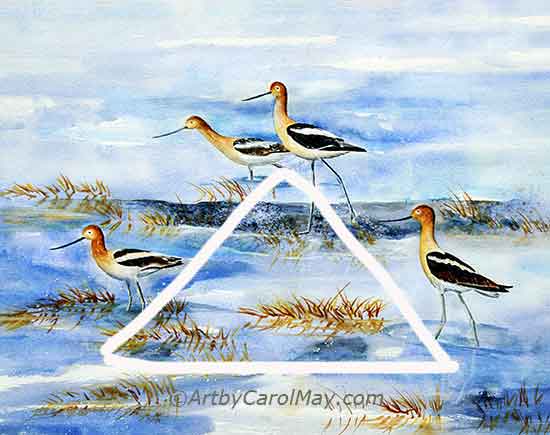 Avocets in a pyramid composition
The L-shaped Composition
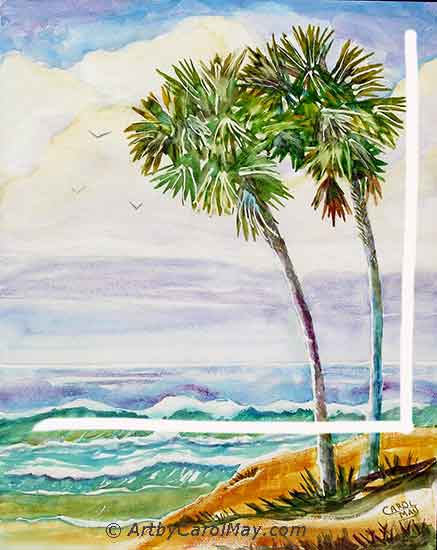 Reversed L-shaped composition
This composition has a backwards "L" for a good reason.
In our western culture people read from the left to the right.
So that means they also look at paintings from the left to the right.
A couple of tall palm trees on the left edge of the painting would keep the viewers eyes from comfortably entering the painting.
The ocean waves on the bottom part of the L-shape are the leading line into the painting. They guide our eyes over to the palm trees.
The trees are rising out of an angled spot of earth. The angle makes a smooth transition from the horizontal water to the vertical trees.
A few birds in the distance entertain the viewer when they enter the painting from higher up.
Cross Composition
This oil butterfly painting is done in a symmetrical composition of a cross.
The variation of colors in the background keeps it from being totally symmetrical.
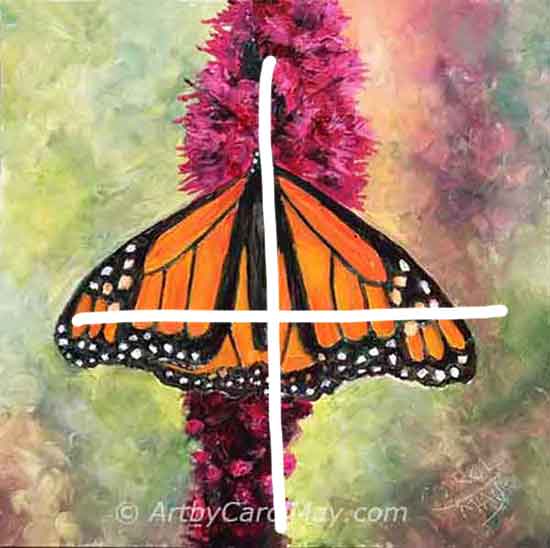 A Cross composition of a Monarch on flowers.
Diagonal Composition
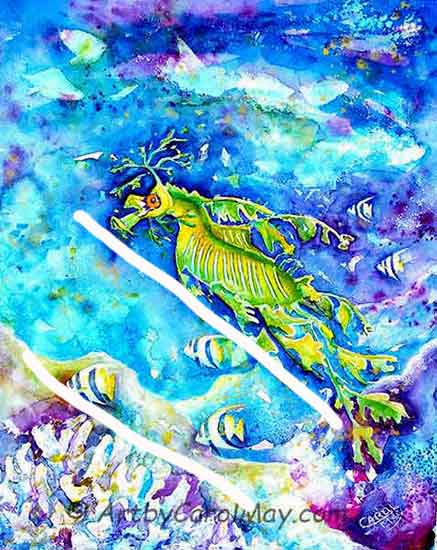 Painting in a diagonal composition.
Diagonal lines denote action and movement.
In contrast, horizontal lines are peaceful and restful. (There are no horizontal lines in this painting)
The diagonal line of the Sea Dragon tells us he is swimming forward.
The front of his head is far enough away from the side of the painting to keep our view inside the artwork.
The diagonal line of the coral in the lower left repeats the action line and also anchors the bottom of the painting.
The fish between the two diagonal lines also show movement and tie the diagonal lines together.
Radial Composition
On first glance this dog painting just looks like a symmetrical composition. It is symmetrical, but with a variation.
Lines radiate from the center of the dog's nose up to its ears and down to the paws, thus making it a radial composition.
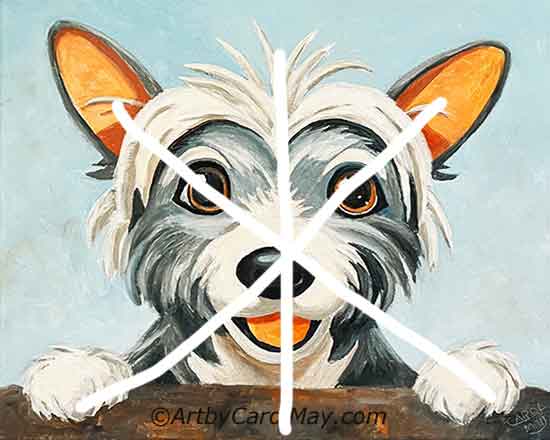 Radial painting composition
S-curve Composition
The S-curve is a useful composition when there are multiple elements in the painting.
The curve gracefully flows down through flowers and butterflies. It shows movement and at the same time ties the elements together.
The S-curve may be flipped left or right according to the desires of the artist.
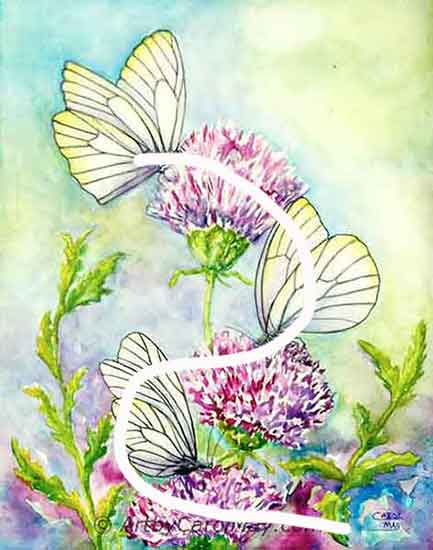 Watercolor in a S-curve composition.
Circle Compositions
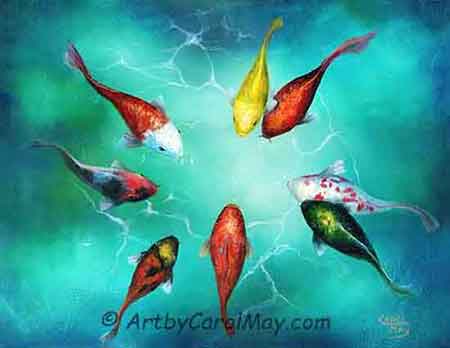 A circle composition of koi.
Circle compositions are basically symmetrical.
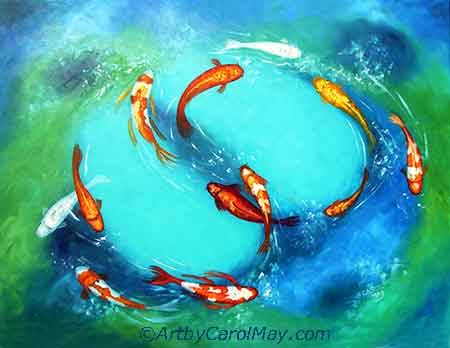 A variation of a circle composition.
Here I had fun painting more koi in a double circle.
How Do We Know What Composition to Use?
Choose the design that suits your subject.
That's the joy of painting, the opportunity to express ourself with one of the various types of compositions.
You Might Enjoy These Pages
Composition in Art for The Painting Artist
A complete guide to composition in painting art: how to use lines, shapes, and placement to create balanced, harmonious paintings that attract the viewers.
Principles of Art: Use Them with the Elements of Art
Create successful paintings using the elements and principles of art. Pleasing compositions are made using any combination of the 7 elements and 10 principles.
How do we use lines or shapes in a composition?
ainting artists create their compositions with lines and shapes. Lines create emotion and lead the viewer to the main subject. Shapes complete the painting.
How to Paint Good Art: Fundamentals Create Awesome Art
Painting good art begins with the fundamentals; composition, focal point, color and values. See them in my painting with a checklist for assessing your art.
Rule of Thirds: Creates Easy Compositions
Artists use the rule of thirds to create dynamic compositions. It's our shortcut for easy composition that creates balanced paintings that attract the viewers.


Recent Articles


-
Design Paintings
Sep 04, 26 12:00 PM
 There are basic types of compositions in art paintings, symmetrical and asymmetrical. Most other compositions are variations of these two basic types. See paintings of the common types; S-curve, pyram…
 -
Good Compositon
Aug 27, 26 01:25 PM
 A good composition draws the viewers to our paintings. How do we make a good composition? When we are designing a painting a good rule is place the main subject (the focal point) left or right of the…
 -
Doing Oil Painting
Aug 09, 26 01:50 PM
 This how to do painting guide helps intermediate artists create a stunning artwork of a horse running in the surf. You will enjoy doing this step-by-step tutorial from the start to the finishing detai…