- Home
- Paint a Butterfly
Paint a Butterfly
Want to paint a butterfly but not sure where to begin? This page will help you get started with a simple 5-step method you can use for almost any butterfly.
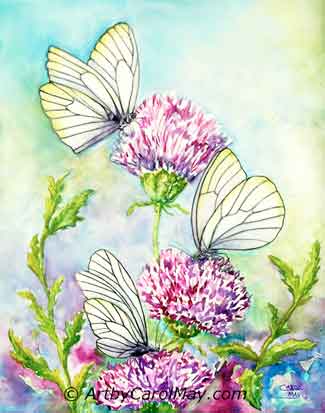
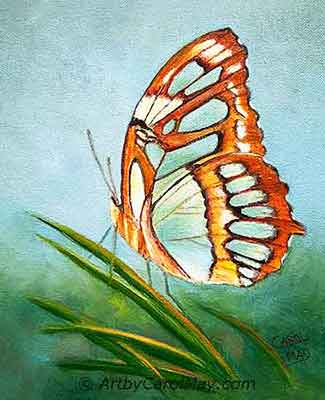
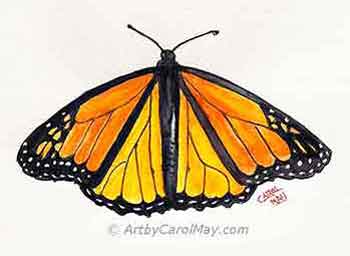
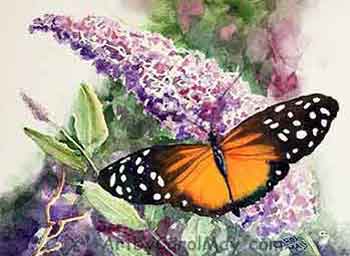
Then you can choose the butterfly tutorial that fits you best - an easy Monarch, a realistic watercolor butterfly, butterflies in a flower composition, or a butterfly painted in oils.
The Tiger Swallowtail example below shows the basic process in action, but the same steps can guide many different butterfly paintings.
Choose Your Butterfly Tutorial
Each butterfly tutorial below offers something a little different. You can start with an easy Monarch, try a realistic watercolor butterfly, paint butterflies with flowers, or follow a butterfly oil painting lesson.
Pick the one that fits your interests and skill level best.
- Paint a Butterfly with a Tiger Swallowtail
- A simple 5-step watercolor example that teaches the basic butterfly painting process.
- Easy Butterfly: Draw and Watercolor a Monarch
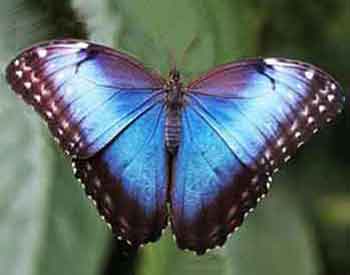
A beginner-friendly lesson for artists who want an easy butterfly project. - Watercolor Butterfly: Realistic Tutorial
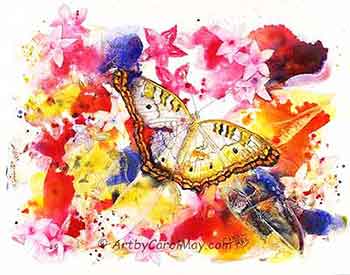
A more detailed butterfly painting for artists who want a realistic result. - Painting Butterflies with Flowers
A watercolor composition tutorial for painting butterflies in a fuller floral scene. - How to Paint a Butterfly in Oils
A step-by-step oil painting tutorial featuring a Malachite butterfly. - See Types of Butterflies to Paint
Browse butterfly photo references and ideas for future paintings.
Featured Example: Tiger Swallowtail Butterfly
If you're not sure which butterfly to start with, the Tiger Swallowtail below is a great first project.
It follows the same 5 basic steps that work for many butterfly paintings, so you can use this example as a guide and then move on to other butterfly tutorials from the collection above.
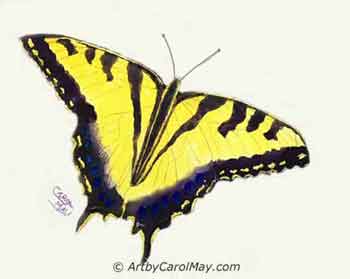 Paint a Butterfly: Swallowtail example
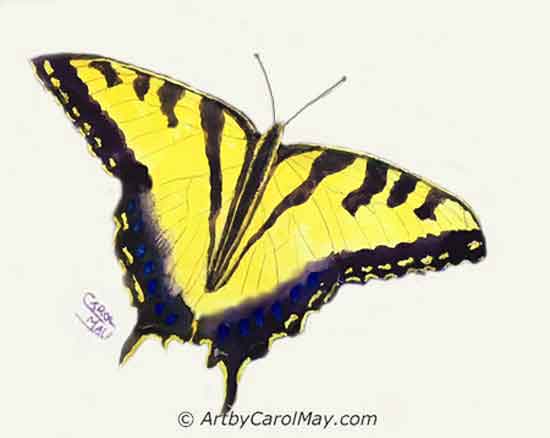 Paint a Butterfly: Swallowtail example
Paint a Butterfly with 5 Steps
Get Ready to Paint
Get your reference material and art supplies.
Reference Materials:
It's best to have a reference to paint from.
- Paint your butterflies from life, in the garden, at the zoo, etc.
- Take your own photos for reference.
- See photos of the Types of Butterflies seen in the United States.
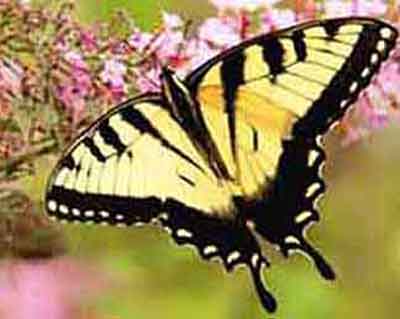 Tiger Swallowtail reference photo
Painting colors:
Lemon Yellow, New Gamboge (any warm yellow), Ultramarine Blue, and Dioxazine Violet
What to paint on:
- Most beginning artists paint on #140 watercolor paper.
- This painting was done on Claybord. My preference is Aquabord, but any of the three work well for watercolor.
Brushes: #7 round, 1/2" flat, and an extended needle-point brush
Let's get started---
Step 1 - Draw and Mask Your Painting
Draw your butterfly on a separate paper because erasures can damage the painting surface.
When you are happy with your drawing transfer it to your painting surface with graphite paper.
Masking
The Tiger Swallowtail has white or yellow spots on the back edge of their wings. You may paint around them, but some masking makes it easier.
Use an art masking fluid (also called, frisket) to keep from getting paint in the areas you want to keep light.
Let the masking dry thoroughly, 10 to 30 minutes depending on your environment.
Learn more about preserving white in watercolor paintings.
Step 2 - Paint the Main Wing Colors
Paint a combination of warm and cool yellow on the butterfly wings.
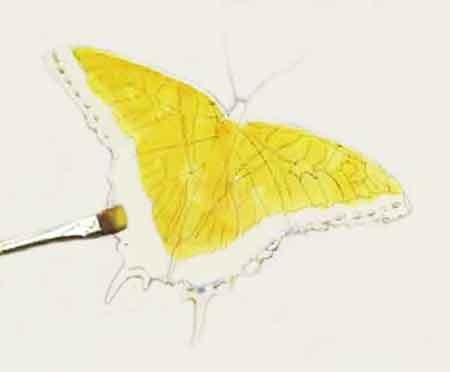 Block-in the wing colors.
It’s always good to have a variation in color in larger areas. One straight, flat - same color is boring.
Pre-wet the wing area, excluding the borders.
Paint the area with a cool/lemon yellow.
Then while it's still wet, load your brush with a warm yellow.
Dab it on leaving areas of the cool yellow showing. The colors will gently flow together.
Step 3 - Paint the Borders and Designs
Many butterflies have black on the borders their wings.
Mix a black from yellow and Dioxazine Violet for the border and veins. If your black is not dark enough, add more violet or a touch of blue.
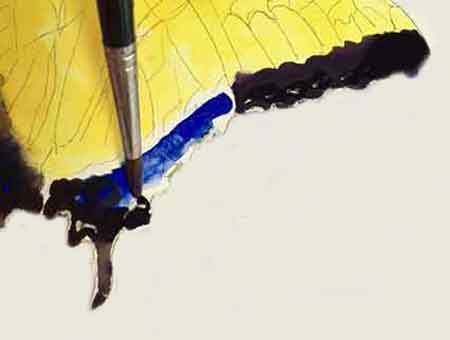 Paint the back edge of the wings.
You will notice on butterflies that the border colors often blend into the main color of the wings.
How do you make the colors
blend in watercolor?
Dampen the edge of the wing color before you paint the border.
Then the colors run together and make a soft edge.
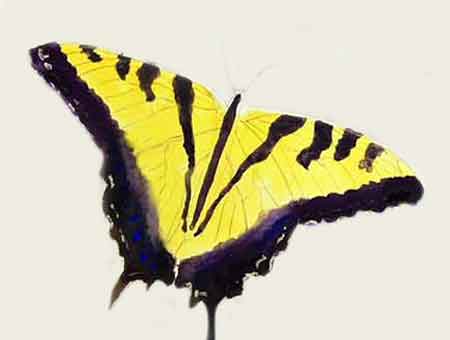 Paint the dark areas in the wings.
(I was going to put some blue like I see on some Swallowtails, but I changed my mind and just made the border black.)
Paint all the other large designs out on the butterfly's wings.
Paint a dark stripe down the center of the butterfly's body.
Leave the sides of the body yellow, we will come back and shade the sides in step 5.
Step 4 - Paint the Veins
Paint the black veins with a fine touch of the tip of a round or a needle-point brush.
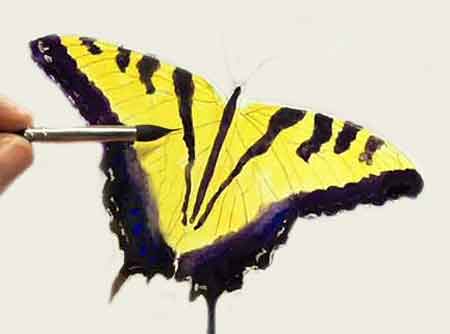 Paint the veins with a light touch.
If your vein lines get crooked or too fat, lift out the mistake with the edge of a damp brush.
Then blot the areas with a tissue and repeat if needed.
The wonderful quality of Claybord and Aquabord
is your mistakes are easy to remove. I use a damp, stiff flat
or angle brush for lifting out mistakes.
Let everything dry and move on to the last step.
Step 5 - Remove Masking and Detail
Take the masking fluid off to expose the unpainted areas.
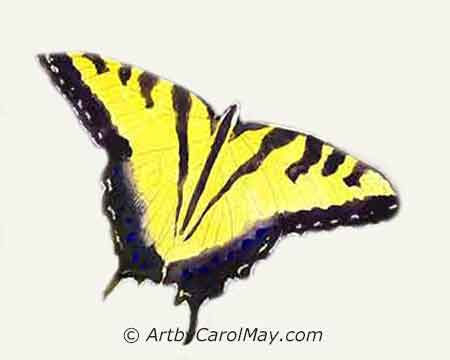 Remove masking to reveal the white.
Normally we would use a rubber cement pick-up tool to remove the masking. But when I did - it started taking up some of the black paint.
So, I used a dry finger to take off the masking without disturbing the black paint.
The masking fluid made it so much easier to preserve the white areas.
It sure beats painting around each and every little spot.
Paint the Details
It's time for the final details.
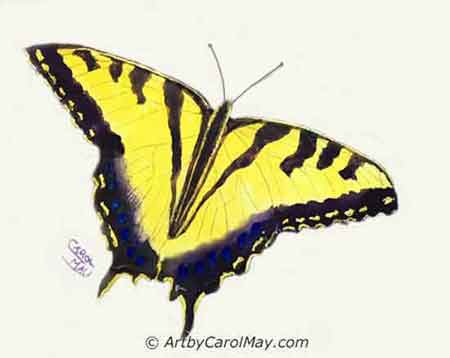 Paint spots, body and antennae.
- Paint the spots and edges on the butterfly wings yellow.
- Water down your black to paint the sides of the butterfly body a soft gray. Paint the outside edges of the body darker to show the contour of the body.
- Use the gray or black to pull out a couple of antennae and put a dark head on the butterfly.
Look around the painting to see if there is anything else to add or adjust.
Hooray, it's time for a signature. (I use a fine felt tip pen.)
You Are Ready to Paint Your Butterfly
You may paint this Tiger Swallowtail butterfly by following the five steps.
Or you may paint any butterfly of your choice with the same steps.
Butterfly Tutorials
If you want to paint a butterfly, the best tutorial depends on the kind of butterfly painting you want to do.
Use the guide below to choose between an easy butterfly, a watercolor butterfly, painting butterflies in a flower composition, or learning how to paint a butterfly in oils.
Happy Butterfly Painting!
Recent Articles


-
The Big Three
Sep 18, 26 12:00 PM
 You can create good art using the big three painting fundamentals. Learn how to paint good art with good composition including a focal point, values and color choices. Use these three important fundam…
 -
Design Paintings
Sep 04, 26 12:00 PM
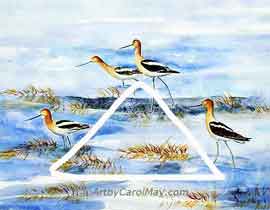 There are basic types of compositions in art paintings, symmetrical and asymmetrical. Most other compositions are variations of these two basic types. See paintings of the common types; S-curve, pyram…
 -
Good Compositon
Aug 27, 26 01:25 PM
 A good composition draws the viewers to our paintings. How do we make a good composition? When we are designing a painting a good rule is place the main subject (the focal point) left or right of the…